
Checking Criminal History in Hayesville
Hayesville criminal records do not sit in one town database. Town government does not operate a police records counter, court, jail, or arrest portal. The first task is to identify who created the record. The Clay County Sheriff's Office handles its own incident and arrest material. The Clerk of Superior Court keeps filed criminal cases. State Highway Patrol records remain with the state agency that created them. The North Carolina eCourts Portal provides public case information, while an official certified search comes through the clerk.
- Read the citation, release sheet, report, or case notice to identify the agency and file number.
- Ask the creating law-enforcement agency for its incident or arrest report.
- Search Clay County in the statewide court service for filed charges and dates.
- Call or visit the Clay County clerk for paper files, copies, and certification.
- Use the appropriate state source only when the question extends beyond the local file.
A name alone can produce false matches. Add a case number, approximate year, or other known file detail. For a broad county-level explanation of each source, the Clay County criminal history overview separates public court data from agency reports and fingerprint-supported state records.
Hayesville's County-Seat Record Geography
Hayesville is Clay County's only active incorporated municipality and its county seat. That puts several government counters close together without making them one office. Town Hall is at 56 Sanderson Street. The current court clerk is at 261 Courthouse Drive, Suite 1. The sheriff is at 295 Courthouse Drive. Each address serves a different function, and a request sent to the wrong counter can stall even when the buildings are nearby.
The official Town of Hayesville site shows the local municipal source and town setting.
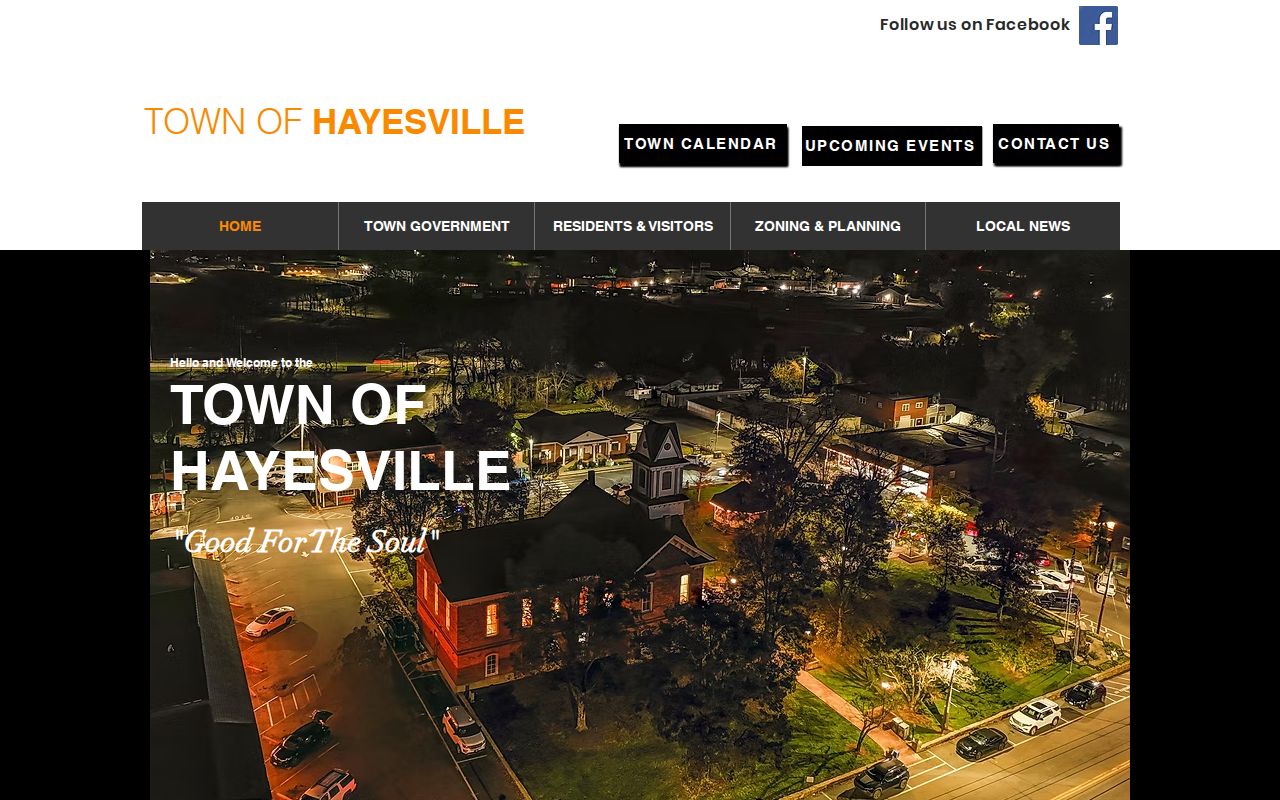
Town Hall can answer municipal administration questions, but it is not the custodian of a sheriff report or a North Carolina criminal case.
Hayesville Police Department Records
There is no Hayesville Police Department. The town states that Clay County supplies all emergency services, and its land-use plan says the community is served by the Clay County Sheriff's Office and North Carolina Highway Patrol. That means Hayesville has no city police report form, PD portal, daily blotter, chief, mobile police app, or city holding facility to search. A phrase such as “Hayesville police record” should be translated into the name of the actual agency.
For a sheriff-created incident or arrest record, call 828-389-6354 or go to 295 Courthouse Drive. Highway Patrol traffic or crash material stays with the state channel linked to that event. A filed case goes to the clerk. Dispatch, CAD, or 911 records are county materials, not Town Hall files. The town's general contact form requests basic contact details, but it publishes no police-record field, fee, identity rule, or processing promise.
Clay County Sheriff's Office
295 Courthouse Drive
Hayesville, NC 28904
828-389-6354
Hayesville Town Hall
56 Sanderson Street
Hayesville, NC 28904
828-389-1862
Three Hayesville Record Counters
The town's official administration page helps identify municipal contacts but does not establish a police records unit.
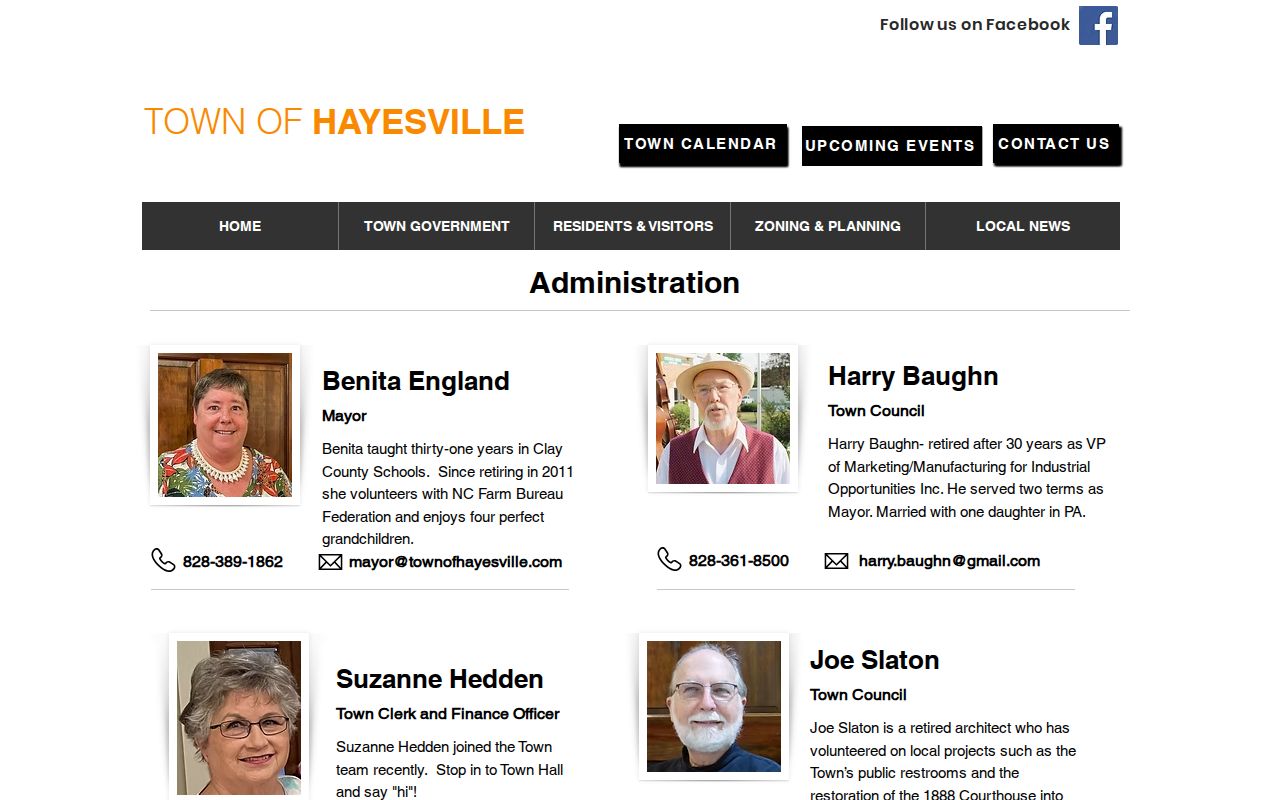
The contact listing underscores the local division of work: town administration, county law enforcement, and state court records remain separate.
| Hayesville-area office | Records to request | Do not use it for |
|---|---|---|
| Town Hall, 56 Sanderson Street | Town administration and municipal material | Sheriff reports, bookings, or court cases |
| Clerk, 261 Courthouse Drive | Filed cases, dockets, paper files, copies | Investigative reports or jail status |
| Sheriff, 295 Courthouse Drive | Sheriff incident, arrest, and local custody information | Certified court files or Highway Patrol reports |
Note: The restored 1888 Courthouse on the square is an event-center landmark, not the current clerk's records counter.
Hayesville Arrests and Bookings
An arrest associated with Hayesville does not prove a town agency made it. Start with the citation or release paper. If the sheriff made the arrest, request the agency report from the sheriff and ask that office about local custody or booking information. If a state trooper made the stop, use the Highway Patrol route for the enforcement record while checking the Clay clerk for any filed criminal or traffic case.
Hayesville has no city jail or booking site. Clay County also did not publish a verified public booking log in the official sources reviewed. The practical fallback is the sheriff's published phone and counter. A booking record describes intake and custody, while a court record shows what charge was filed and how the case progressed. Neither an arrest nor a booking proves guilt. For more detail about the custody channel, use the county Clay County arrest lookup.
When a Hayesville Agency Is Missing
Old papers and informal references may say only “Hayesville,” leaving the arresting agency unclear. Do not assume that label means town police. Check the citation header, officer agency, report prefix, release sheet, or court case for the creator. If those papers are unavailable, search the Clay County case by name and approximate date, then ask the clerk which agency appears in the filed record. The clerk keeps the judicial file but does not issue the agency report.
Next, contact the likely custodian with a tight description: full name, incident date or date range, location, case or citation number, and the exact item sought. Ask the sheriff whether it holds the existing report and what current request method or copy cost applies. No separate Clay sheriff records form, online portal, email address, local fee schedule, or promised turnaround was verified. If the event was a highway matter, take the resulting agency detail to the state patrol channel.
Municipal Court Records in Hayesville
Hayesville does not operate a municipal court. North Carolina's General Court of Justice handles state criminal cases. District Court 43 begins misdemeanor and infraction matters and handles felony preliminary proceedings. Superior Court District 43A hears felony trials. Both local court levels use the Clay County Government Center, so a town-address citation still becomes a county-administered state court record rather than a Hayesville court docket.
| Court system | North Carolina General Court of Justice in Clay County; no Hayesville municipal court. |
|---|---|
| District Court | Misdemeanors, infractions, and felony preliminary matters. |
| Superior Court | Felony trials and misdemeanor or infraction appeals. |
| Case lookup | North Carolina eCourts Portal, statewide court-date tools, or the clerk counter. |
| File contents | Filed charges, docket events, orders, disposition, and sentence where entered. |
| Copies | Ask the clerk for plain or certified copies and the current fee. |
The clerk is at 261 Courthouse Drive, Suite 1, and the main number is 828-389-2300. Public self-service terminals can search by defendant name, case number, or victim or witness name. Paper files are inspected in the county where filed.
Search Hayesville Court Dates Carefully
The Clay County administrative schedules page advertises searches by case number, party, or attorney. A statewide court-date service can also route by citation number or defendant name. Select Clay County to keep a Hayesville-area query local. A calendar result gives a date and setting, not the whole case file or a fingerprint-supported statewide criminal history.
| Search field | Type | Use |
|---|---|---|
| Citation Number | Text or tab | Use when the citation is available. |
| Defendant Name | Text or tab | Use carefully when a case number is unknown. |
| Case Number | Text or tab | Best route to a known Clay file. |
| Party / Attorney | Text | Advertised on the local schedules page. |
| County | Filter | Select Clay for a local case search. |
For an older file, missing digitized document, or certified result, use the clerk counter. Court staff can provide access and process copies but cannot decide eligibility or give legal advice.
Where Hayesville Records Go
A sheriff or trooper first creates the enforcement record. Local detention staff may create booking data. A magistrate issues initial judicial process and release conditions. The clerk then keeps the court file after charges are filed. Fingerprint-supported arrest information can move to the North Carolina State Bureau of Investigation, while later court dispositions are matched to the state history entry.
Record flow: Clay County Sheriff or North Carolina Highway Patrol › Clay County Courts › North Carolina State Bureau of Investigation
This flow explains why one Hayesville criminal record search can show an open case while another source has not yet matched the disposition. It also explains why an incident with no reportable fingerprint submission may be absent from the state repository. For current local facts, begin with the creating office. For filed charges, use the clerk or eCourts. A person reviewing their own statewide fingerprint record uses the mail-only NCSBI Right to Review.
Hayesville Records by the Numbers
The North Carolina Office of State Budget and Management estimate placed Hayesville at 483 residents on July 1, 2024. The same source reflected an 11,616-person county balance outside the town, for 12,099 total when the municipal and balance figures are combined. Its land table reported one municipal square mile and 214 nonmunicipal square miles. The Census county profile supplies broader county context. That scale gap matters because “Hayesville” is widely used as a postal label beyond the legal town boundary.
County crime statistics cannot be renamed Hayesville crime rates. The SBI's 2024 summary reported Clay County violent-crime rates of 69.3 in 2023 and 119.4 in 2024, and property-crime rates of 1,134.5 and 1,262.3. Those figures describe the county reporting scope, not the town alone. With a small population, modest raw changes can also make rates per 100,000 move sharply. Use them as county context, not as a town ranking or proof about one neighborhood.
Public Access Rules in Hayesville
The North Carolina Public Records Law governs many agency records, while Judicial Branch rules govern access to court files. G.S. 132-1 starts with a broad public-record definition, and G.S. 132-6 generally requires inspection and copies at reasonable times. It does not set one fixed response-day deadline for all requests. An agency can charge actual reproduction cost and, for an extensive request, a special service charge allowed by G.S. 132-6.2.
Key North Carolina laws:
Chapter 132 sets the state's general public-record framework.
G.S. 132-1.4 treats criminal investigation records specially while identifying certain law-enforcement information as public.
G.S. 7A-271 assigns qualifying criminal matters to Superior Court.
G.S. 7A-272 sets District Court's misdemeanor jurisdiction and specified felony authority.
Investigative and intelligence records are not public records under the same rule as an ordinary town document. Yet the statute makes specified facts public, including the time, date, place, and nature of an apparent violation and certain facts surrounding an arrest. Juvenile information, victim identity, active investigative material, and sealed records may be withheld or restricted. Ask for an existing record and allow redaction rather than demanding an office create a new summary.
Hayesville Town Resources Are Not Case Files
The official Hayesville resources page lists local public-service contacts and confirms county emergency-service coverage.
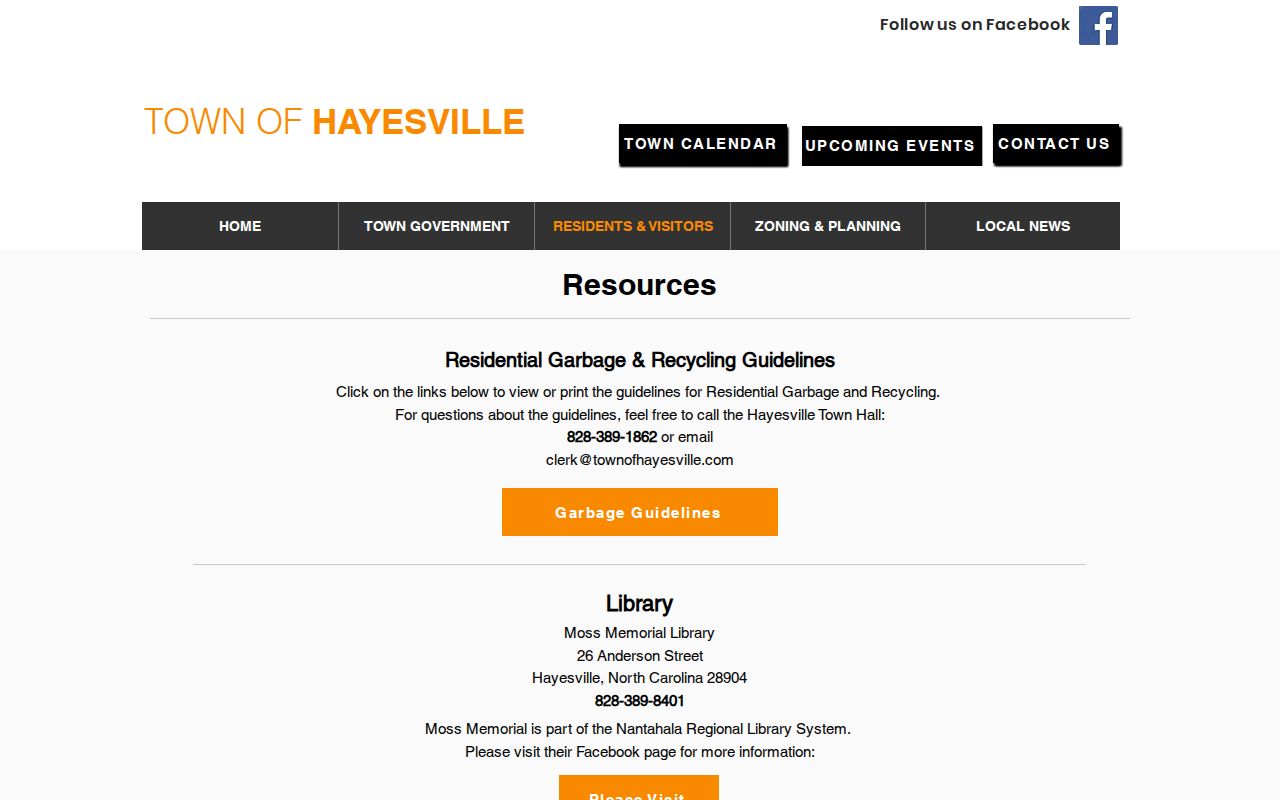
The page is valuable for finding the right service, but it is not a criminal-record portal, warrant list, booking log, or police report request form.
Other familiar sites can create the same confusion. Moss Memorial Library on Anderson Street is a civic landmark, not a records repository. The restored 1888 Courthouse on the historic square is not the active court counter. Modern criminal files are at the Government Center. Hayesville's history as the former Cherokee town of Quanassee and as a county seat explains why civic functions cluster here, but the present custodian still controls access.